|
| Lake Rosseau, Muskoka |
Monday, April 6, 2015
My New Blog
Please visit my new blog, The Muskoka Novels, where I will be posting weekly photos, historical tidbits, and musings about writing. This blog is now archived.


Thursday, February 5, 2015
Literary Tourism
Long before I ever set foot in Britain, I
wandered the bleak, forbidding Yorkshire moors with Catherine and Heathcliff,
explored the ancient byroads of Thomas Hardy’s Wessex, and was captivated by
Daphne du Maurier’s Cornwall. How thrilling,
then, to do a literary pilgrimage on my honeymoon.
So convinced was I that every fan of Emily
Bronte’s classic novel must want to visit Top Withens - the ruins of a
farmhouse which supposedly inspired Wuthering Heights - that I was pleasantly
surprised there wasn’t a highway to the door and a McDonald’s and souvenir shop
flanking it. In fact, my husband and I trekked across miles of empty moorland
on a dirt path to get there, encountering only a few sheep en route. How
wonderful that the landscape had hardly changed since Emily roamed her beloved
moors, and how easy it was to imagine the ghosts of Catherine and Heathcliff
still lingering.
Jamaica Inn on
brooding Bodmin Moor was the perfect setting for the sinister wreckers and
smugglers Daphne du Maurier had instilled in my imagination. On a more recent visit, I was saddened to see
that a motorway now cleaved the moor – and the once-haunting atmosphere - and Jamaica Inn had expanded to cater to highway
travellers. But you can still stay in the ancient coaching inn, as du Maurier
did in the 1930s.
Another literary excursion took my family
through the breathtaking Yorkshire Dales so lovingly described by James
Herriot. The area is known as “Herriot Country”, and brochures also list the
locations where the popular BBC series, ”All Creatures Great and Small”, based upon
his novels, was filmed.
Like millions from around the world, we’ve travelled
to Prince Edward Island to explore the charming landscape of L.M. Montgomery’s endearing
Anne
of Green Gables and other tales. Fans of her adult novel, The
Blue Castle, are also drawn to Muskoka, which so enchanted Montgomery
during a 1922 holiday that she set her only non-PEI novel there.
 |
| Site of the Sanatorium in Under the Moon and an important location for Book 4 |
As an author, I’ve been delighted to hear
from fans worldwide that they look forward to visiting Muskoka some day, and
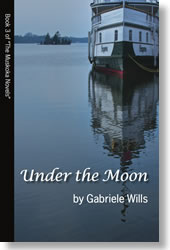
others who have been seeking the locations of scenes in my novels, The
Summer Before the Storm, Elusive Dawn, and Under
the Moon.
Last year had the pleasure of taking German
relatives on a tour. Already enthralled by the unfamiliar cottage culture they
had read about in my books, they were awed by the unique boathouses, grand
mansions and cozy cabins, antique launches and regal steamships, and the rugged
beauty of the lakes. Visiting the
Muskoka Boat and Heritage Centre added another interesting dimension for them. Smitten, they wanted to stay longer and will
be returning at the first opportunity.
So literary tourism is a joy for fans, and
surely a boost to the local economy. At the request of Muskoka Tourism, I’ve
prepared a “Muskoka Novels Tour”, which directs fans to various locations used
or fictionalized in the books. (It should
be on the Tourism website by summer.)
Muskoka will undoubtedly work its usual magic
on newcomers.
Monday, July 21, 2014
Special Promotion on E-books!

"It was the whisper that started their war. That's how
many at the table that evening would recall the summer of 1914."
So begins The Summer Before the Storm, the first of the
Muskoka Novels. Since it's two weeks until the 100th anniversary of Canada
going to war, there's a special price for the Kindle and kobo versions of The
Summer Before the Storm. Only $2.99! Don't miss out on this limited-time offer,
which ends Aug. 5. Visit this website for links to the e-books.
Saturday, January 11, 2014
The Age of Elegance Goes to War
In remembrance of The Great War during this centenary year,
my new blog will explore the intriguing social history of that tumultuous time.
Please visit The Age of Elegance Goes to War.
Wednesday, November 27, 2013
Surprising Facts Inspire Intriguing Fiction
Thanks to historical fiction author M.K. Tod for inviting me to do a guest post on her blog - A Writer of History. I discuss how the obscure and quirky facts I uncover in my research inspire characters and plots in my novels.
Tuesday, April 23, 2013
Party like it's 1913!

Tickets are on sale for the Muskoka Boat & Heritage
Centre's Fundraising Gala, June 1, 2013 - dinner, dancing, and
entertainment. Come in period costume if you like!
I'll be giving a brief presentation about Muskoka's Age of
Elegance. Hope to see you there! For more information, visit this
site - segwun.com
Tuesday, April 16, 2013
Historic Millionaire's Row

This is Buck Island, one of the original cottages of “Millionaire’s
Row” near Beaumaris on Lake Muskoka, built around the turn of the last century.
Tucked away in the trees, it’s difficult to appreciate its size: it boasts 14
bedrooms, 8 baths, many en suite, 8 fireplaces, and a miniature house in the
attic for the children. The once lush gardens, maintained by a staff of 10
full-time gardeners, were renowned, drawing admirers from around the lakes.
The Beaumaris area was also called “Little Pittsburgh”,
since many cottagers were wealthy American industrialists, financiers, and
tycoons from Pennsylvania. A million dollars bought a lot in the days when the
average wage in North America was $490 per year! Women teachers in Canada were
paid only $246 annually, while male teachers earned nearly double that. Little
wonder that millionaires could build lavish summer homes and retain dozens of
servants.
In my Internet travels, I just happened to notice that this
historic summer estate on Buck Island is for sale. It can be yours for a mere
$3.9 million. To those who don’t know Muskoka, this may seem like a lot of
money, but many cottages sell in the multi-millions, although few have such a
rich history. And you would own the entire island. If you’re interested, here
is the Real
Estate listing. Dream on!
Subscribe to:
Posts (Atom)
Muskoka

my inspiration for a series of novels - visit theMuskokaNovels.com for more info